Composite Chart: What It Reveals About A Relationship
By:Author:Nordastro Editorial
Updated on:October 18, 2026
- What a First Reading Session Could Look Like
- How Often a Shared Chart Is Worth Revisiting
- Sun Sign Pairing Versus a Full Midpoint Chart
- Making Room for This Kind of Reading Together
- Who This Kind of Reading Actually Helps
- When the Patterns Start Feeling Recognisable
- Reading a Composite Chart Through Nordastro
- Turning a Shared Chart Into an Ongoing Conversation
A chart built from two birth charts shows the midpoint between every planet in each person's sky - not either person on their own, but the relationship as a third thing with its own patterns.
It works by taking the degree position of each planet for both people and finding the point exactly between them, then plotting those midpoints as a new chart with its own houses and aspects.
This guide covers how to read one, how often it's worth revisiting, why it beats guessing from sun signs alone, and where it fits next to a full birth chart reading.
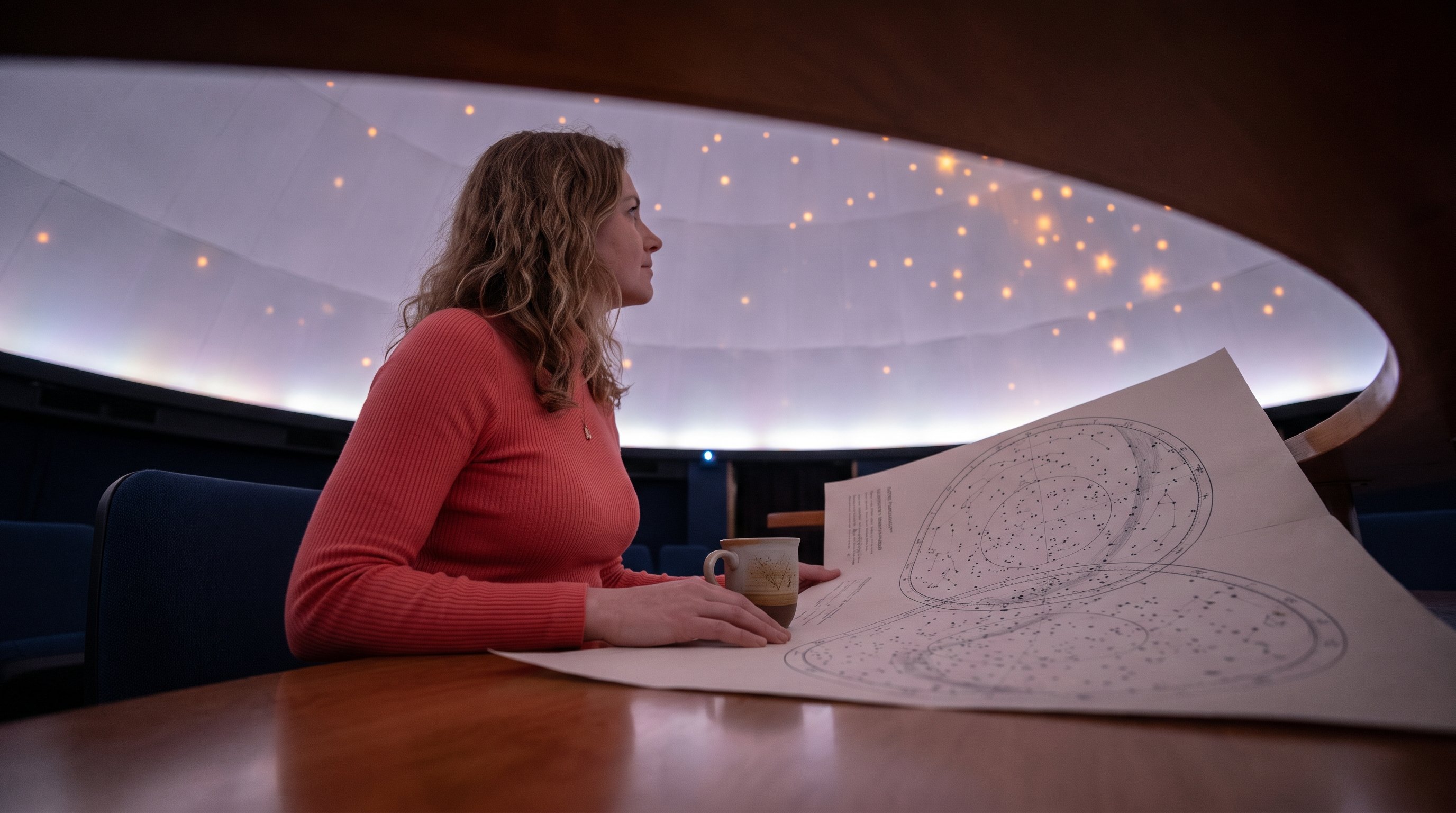
What a First Reading Session Could Look Like
There's no need to read the whole thing in one go. A focused session works better spread across a few sittings, each one aimed at a different layer.
A Sample Reading Session
- Sun and Moon midpoints - the core identity and emotional tone the two of you create together
- Venus and Mars midpoints - how affection and friction tend to show up between you
- The ruling houses - which life areas (home, work, communication) the relationship naturally leans into
- Any tight aspects - the handful of connections worth paying attention to over the looser ones
Going section by section like this keeps the read grounded instead of turning into a search for one dramatic line.
How Often a Shared Chart Is Worth Revisiting
Checking in Without Overdoing It
The midpoints themselves never change, since they're fixed by the two birth dates and times. What's worth revisiting is how current transits move across those midpoints, which shifts the relevant focus over time.

| Moment | How Often To Look |
|---|---|
| Early in a relationship | Once, as a baseline |
| Big life changes | Once per change |
| Anniversaries | Once a year |
| During a rough patch | Once, not repeatedly |
| Long-term partnerships | Every year or two |
Checking too often tends to turn a reflective tool into a source of anxiety, which defeats the point of using it at all.
Sun Sign Pairing Versus a Full Midpoint Chart
Comparing two sun signs is the easy route - quick, memorable, and based on one data point each.
A midpoint chart takes longer to build and read because it factors in planets, houses and aspects from both people, not just the sun.

The trade-off is worth it: two people with the same sun sign pairing can have completely different midpoint patterns, because the rest of each chart is doing most of the work.
Sun sign pairing is the shortcut that's easy to stick with; a full midpoint reading is the longer route that actually reflects the two people involved.
Making Room for This Kind of Reading Together
Reading a shared chart works best as something two people sit down to do together, not something read alone and reported back on.
A slow evening with both birth details on hand, no deadline, and a willingness to talk through what comes up tends to get more out of it than rushing through it solo.
Nordastro's app includes a compatibility check built from each person's actual birth details, which makes it easier to sit down together and look at the same read at the same time rather than comparing notes from two separate apps.
Who This Kind of Reading Actually Helps
New Relationships
Early on, a midpoint reading can highlight which areas of life the relationship naturally gravitates toward, which is useful context rather than a verdict on whether it will last.
Long-Term Partners
After years together, the same chart can reflect patterns that have already played out, which often makes the reading feel less abstract and more like a mirror.
Friends and Family
This kind of reading isn't limited to romantic pairings - the same midpoint method applies to any two people, including close friends or siblings.
Skeptical Partners
For anyone who finds astrology hard to take seriously, reading it as a structured conversation starter rather than a prediction tends to land better.
When the Patterns Start Feeling Recognisable
The first read-through often feels abstract, especially for anyone new to chart work - that's normal and not a sign it isn't working.
It's worth staying vague on exact timing here, since every pairing and every reader's familiarity with astrology differs.
What tends to happen is that specific lines start matching specific moments in the relationship on a second or third pass, once the initial unfamiliarity wears off.
This is also the point where most people either drop the practice out of impatience or stick with it long enough for it to become genuinely useful - sticking with it a bit longer is usually what makes the difference.
Reading a Composite Chart Through Nordastro
Building a midpoint chart by hand means calculating degree positions for every planet in two separate birth charts, then averaging each pair - doable, but slow and easy to get wrong.
Nordastro's book starts from a tailored birth chart analysis built from your own birth details, covering your strengths, challenges and growth paths alongside dedicated chapters on love, career and life direction.
Paired with the app's compatibility check, the same underlying chart work that would otherwise take a notebook and a lot of patience becomes something you and another person can look through together in one sitting.
Discover What Awaits You
See Your Future Today
Turning a Shared Chart Into an Ongoing Conversation
The most useful next step is simple: pick an evening, gather both birth details, and work through the sun, moon, Venus and Mars midpoints together before moving on to anything else.
Treat whatever comes up as a starting point for conversation, not a final answer, and the reading does more good than it would sitting unread in a notes app.
Nordastro's customized book and compatibility app give that conversation somewhere structured to start, built from the actual birth details of the people involved rather than a generic pairing of signs.
FAQ
No - it reflects the shared tendencies and themes between two people, not a fixed outcome. Treat it as a mirror for the relationship as it currently stands, not a forecast.
Not quite - comparing two charts side by side (synastry) looks at how one person's planets interact with the other's, while a midpoint chart blends both into one new chart. They're related tools that answer slightly different questions.
The sun and moon midpoints can still be calculated with a rough birth date, but house placements need an accurate birth time to mean much. Start with the planetary midpoints and treat the houses as a loose guide if the time is uncertain.
It can help put words to patterns that already feel familiar, which some people find clarifying rather than discouraging. Nordastro's compatibility app makes it easy to look at that pattern together without needing to calculate anything by hand.
Share this post